
Montessori Education
Discover the VSY Montessori Magnet Program
Where Excellence, Joy, and Purposeful Learning Come Together
At Virginia Shuman Young (VSY) Elementary, we don’t just teach—we ignite a lifelong love of learning. As a premier Montessori Magnet School in Broward County, VSY offers a transformative educational experience that blends academic excellence with the timeless principles of Montessori education. Our program is designed for families who want more than just a school—they want a community where their child is seen, celebrated, and empowered to thrive.
Why Families Choose VSY Authentic Montessori Education
At VSY, Montessori isn’t a label—it’s a lived philosophy. Our classrooms are carefully prepared environments where students engage with hands-on materials that make abstract concepts concrete and meaningful. From math and science to language and cultural studies, children learn by doing, exploring, and discovering. Our certified Montessori educators guide students with intention and care, fostering independence, curiosity, and a deep sense of purpose.
Multi-Age Classrooms That Build Confidence and Community
Our mixed-age classrooms are the heartbeat of our school. Younger students learn from older peers, while older students develop leadership and empathy by mentoring others. This structure mirrors real-world collaboration and creates a strong sense of belonging. At VSY, every child has a role, every voice matters, and every learner is both a student and a teacher.
Personalized, Standards-Aligned Learning
We believe that excellence and individuality go hand in hand. Our Montessori curriculum is seamlessly aligned with Florida’s BEST standards, ensuring students meet and exceed academic expectations while progressing at their own pace. Teachers use observation, data, and deep knowledge of child development to tailor instruction to each learner’s strengths, needs, and interests.
A Culture of Peace, Equity, and Inclusion
VSY is more than a school—it’s a peaceful, inclusive community where diversity is celebrated, and every child feels safe, respected, and valued. Rooted in Montessori’s vision of education for peace, we intentionally cultivate empathy, cultural awareness, and social responsibility. Our students don’t just learn about the world—they learn how to make it better.
Whole-Child Development That Lasts a Lifetime
We nurture more than academic achievement. Through daily routines, purposeful work, and real-world problem-solving, students develop executive functioning, emotional intelligence, and a strong sense of self. VSY graduates leave our school not only well-prepared for middle school, but equipped with the confidence, compassion, and critical thinking skills to lead and succeed.
A True Partnership with Families
We know that children thrive when families and schools work together. At VSY, parents are valued partners in their child’s educational journey. We offer meaningful involvement opportunities, and a warm, welcoming atmosphere where families feel connected and supported every step of the way.
The VSY Difference
As a public Montessori magnet, VSY offers an unparalleled opportunity: a world-class Montessori education within a vibrant, high-performing school. Our reputation for excellence, innovation, and whole-child learning makes us a destination school for families across Broward County.
Come see why VSY is the school every parent dreams of—and every child deserves.
Schedule a tour. Join our community. Watch your child thrive.
Who is Dr. Maria Montessori
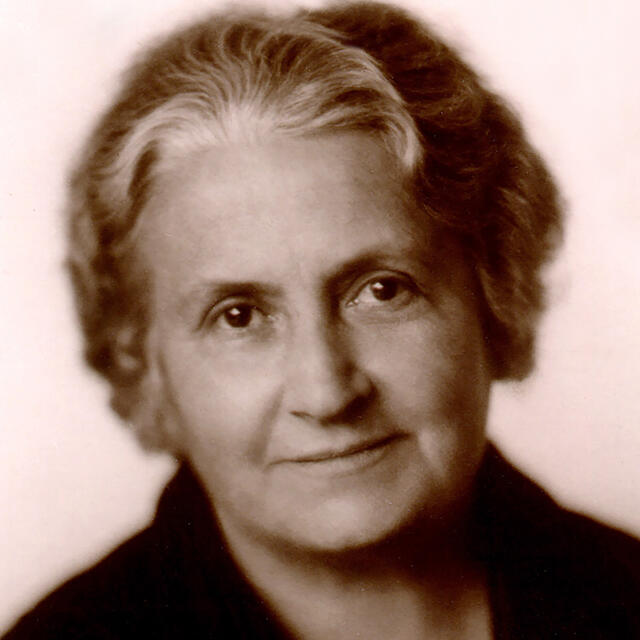
"Movement of the hand is essential. Little children revealed that the development of the mind is stimulated by the movement of the hands. The hand is the instrument of the intelligence. The child needs to manipulate objects and to gain experience by touching and handling"
-Maria Montessori
The Montessori Program at Virginia Shuman Young Montessori Elementary School is based on the educational philosophy of Dr. Maria Montessori. Dr. Montessori was a visionary, a brilliant Italian scholar, educator, physician, and scientist. In 1896, she earned a degree of Doctor of Medicine, making her one of the first women to graduate from medical school in Italy. Her residency placed her at an institution for mentally handicapped children. This experience fostered in her an interest in psychology and human behavior. By 1906, she resigned to her position as a professor of anthropology at the University of Rome to open an educational center called Casa dei Bambini— “Children’s House,” located in San Lorenzo, a poor, inner-city district in Rome.
There, she worked with some of the area’s most disadvantaged children. In the Casa dei Bambini, Dr. Montessori created an environment that supported the children’s natural development; a place where children could explore and engage in hands-on learning experiences. Dr. Montessori soon discovered that when children were exposed to hands-on, stimulating, real-life experiences they inherently knew what they needed to learn and were capable of collecting tremendous amounts of information and wisdom about the world around them. This is where she developed her educational methods, which became so successful that even children considered unteachable began to have success.
By 1909, Dr. Montessori’s innovative methods of education had attracted the attention of prominent educators and had sparked interest around the world. By 1910, Montessori schools were being established in Europe and other countries. In 1911, the first Montessori school opened in the United States. Dr. Montessori’s revolutionary principles about children and the process of learning have changed education. Today, there are more than 5,000 Montessori programs in this country and over 20,000 worldwide.
More on Montessori Philosophy
Montessori education focuses on a child's holistic development, emphasizing independence, practical life skills, and hands-on learning in a prepared environment. The method aims to help children develop their social, emotional, and intellectual potential at their own pace through self-directed activities and collaborative multi-age classrooms. Key principles include respect for the child, the absorbent mind, sensitive periods, the prepared environment, and auto-education.
Core principles
-
Holistic development:
Focuses on the social, emotional, intellectual, and physical growth of the child.
-
Independence:
Encourages children to become self-sufficient and capable through activities like pouring, buttoning, and cleaning.
-
Hands-on learning:
Uses specially designed materials to allow children to learn concepts through concrete, tactile experiences.
-
Prepared environment:
Creates a nurturing and orderly environment with tools and materials adapted to the child's developmental needs, fostering a sense of order and a love for learning.
-
Self-directed learning:
Allows children to learn at their own pace, focusing on subjects that interest them and moving on when they are ready.
Key focus areas
-
Practical life skills:
Teaches everyday skills like dressing, food preparation, and cleaning, which build coordination, concentration, and a sense of order.
-
Academic subjects:
Provides a deep understanding of subjects like math and reading through hands-on activities that go beyond simple memorization.
-
Grace and courtesy
Teaches social skills, conflict resolution, and respect for others, which is fostered in a multi-age classroom environment where children learn from and support one another.
-
Executive functions:
Focuses on developing skills like self-awareness, self-regulation, and motivation.
-
Cultural and global awareness:
Integrates subjects like geography, history, science, art, and music to give children an understanding of the world and their place in it.